 HR
HR  DE
DE From the subtropical coast of the Black Sea to the snowy passes of the Greater Caucasus, from remote mountain villages to improvised river crossings. Fourteen days in Georgia showed us why a proper 4x4 expedition cannot be prepared just behind a computer screen.
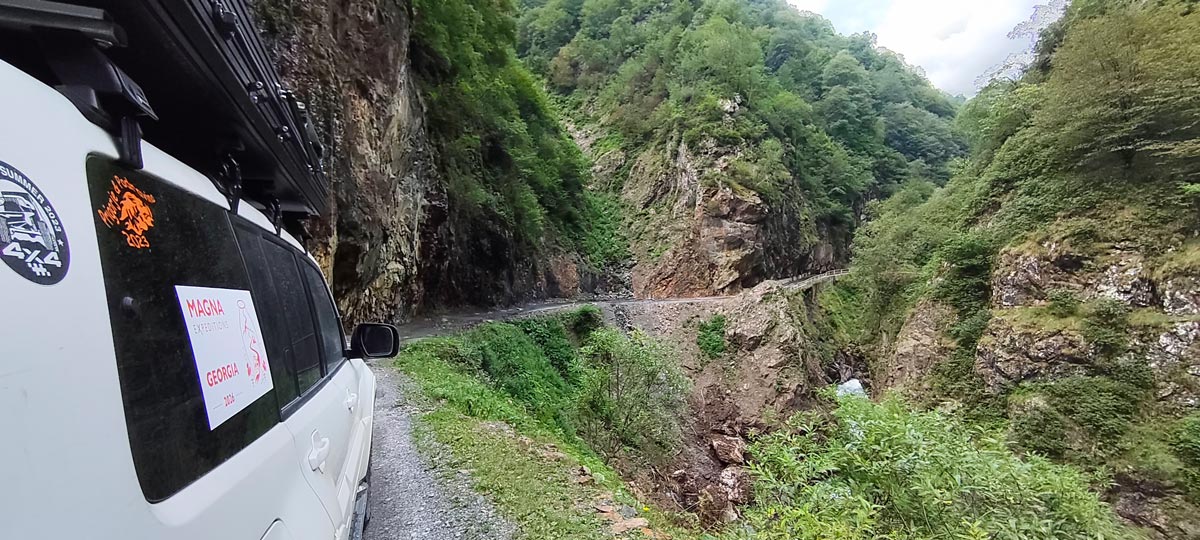
The Expedition Begins Before the First Travelers Arrive
On a map, Georgia is a relatively small country. Yet, rarely can you experience so many different landscapes, climatic conditions, and ways of life in such a small area. On the Black Sea coast, you are greeted by heat and a subtropical climate, while just a few hours' drive away, mountain passes lead you through clouds, rushing torrents, and snowdrifts that refuse to yield to summer even in the middle of August.
Such contrasts are precisely why we chose Georgia for one of our scouting expeditions.
At Magna Expeditions, preparing a new route does not end with drawing interesting locations on a map. A navigation track can show where a road passes, a satellite image can reveal the layout of the terrain, and online reviews can help with choosing a restaurant or accommodation. But none of that can fully answer the questions that matter when you need to lead a group of off-road vehicles down that same route.
What is the surface like after rain? Can a vehicle with a roof tent or a heavier camper be safely driven along a narrow mountain path? Is there an alternative if the weather closes a pass? Where is it possible to camp, refuel, or find accommodation when the plan doesn't go according to schedule? And, perhaps most importantly, who can you rely on when you find yourself in a situation that cannot be resolved with a single click on a screen?
That is why we head out into the field before taking guests along the same route. We check the tracks, meet local people, look for reliable partners, and test what often seems simpler on a map than it actually is in reality.
Because a screen and a keyboard are not the same as mud, rain, sun, and living people.
Our Georgian scouting expedition lasted 2 weeks. The journey took us from Batumi through the Javakheti plateau and the Kakheti wine region to remote Tusheti, then across the harsh tracks of the Greater Caucasus, historical towns, and mountain villages all the way to Svaneti and back to the Black Sea coast.
And Georgia very quickly showed us that this would be much more than a simple tour of interesting locations.
From the Black Sea to a Plateau Over 2,000 Meters High
We started our journey in Batumi, a city where Georgia's modern, almost futuristic face meets the heat and humidity of the Black Sea coast. From there, we headed inland, via Khulo and the Goderdzi Pass, up to 2,000 meters above sea level.
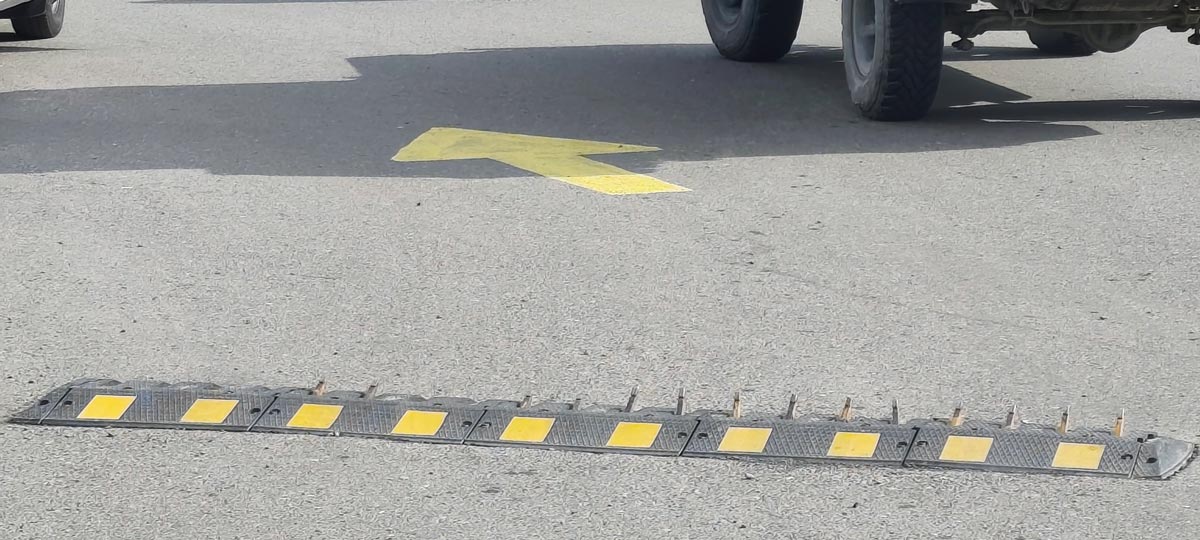
Already on the first day, it became clear that the biggest challenge wasn't necessarily the off-road sections. Georgian traffic requires constant concentration, and roadworks are often carried out with minimal signage. Rules that should make it easier for a European driver to navigate a construction site sometimes simply do not exist. You have to read the situation, anticipate other people's moves, and leave enough room for the unexpected.
After mountain pastures and wooden shepherd huts, we descended toward the Kobliani River valley, visited the Zarzma Monastery and the Rabati Fortress in Akhaltsikhe. We ended the day camping by the Mtkvari River, far from the hustle and bustle of the city.
Such an end to the day is not just about atmosphere. The ability to find a suitable camping spot is an important part of planning a multi-day expedition. It is necessary to assess access, terrain flatness, distance from water and settlements, and the possibility of continuing the journey the next morning. An ideal location for a photograph does not necessarily have to be a good location for a group of vehicles.
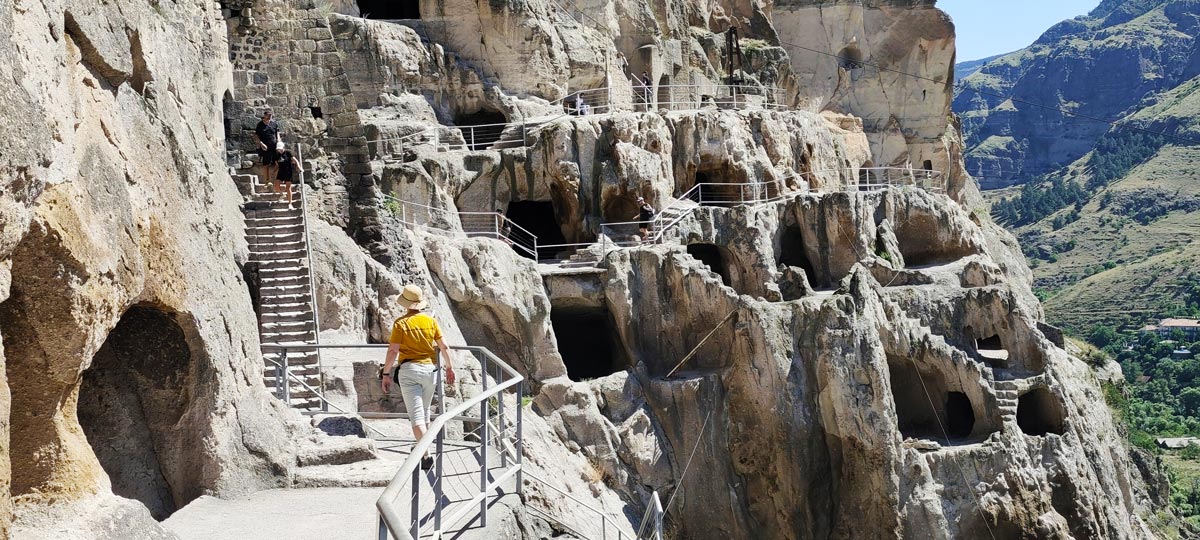
The next day awaited us with Vardzia, the magnificent 12th-century cave city carved into the cliffs above the Mtkvari River. The former complex had thousands of rooms spread across multiple levels, and its scale and organization testify to the exceptional architectural skill of medieval Georgia.
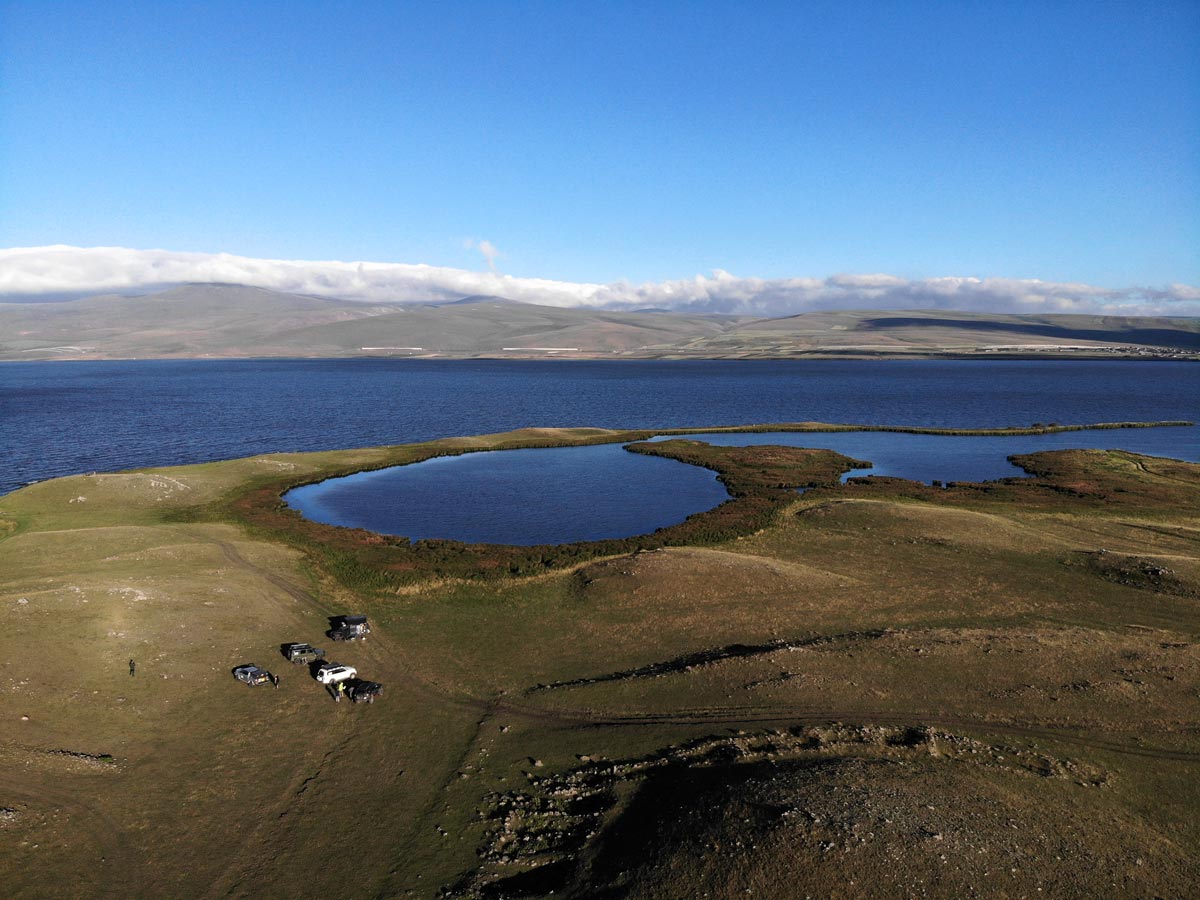
However, instead of returning via the familiar road, we decided to continue across the mountain massif toward Lake Paravani. There, the landscape changed once again. At over 2,000 meters above sea level, we were greeted by a cold wind, significantly lower temperatures, and huge swarms of dragonflies whose buzzing sounded like a distant swarm of drones.
Georgia reminded us of an important fact in just the first two days: a summer date on the calendar means little when you are high in the mountains.
A Road That Looks Simple on the Map
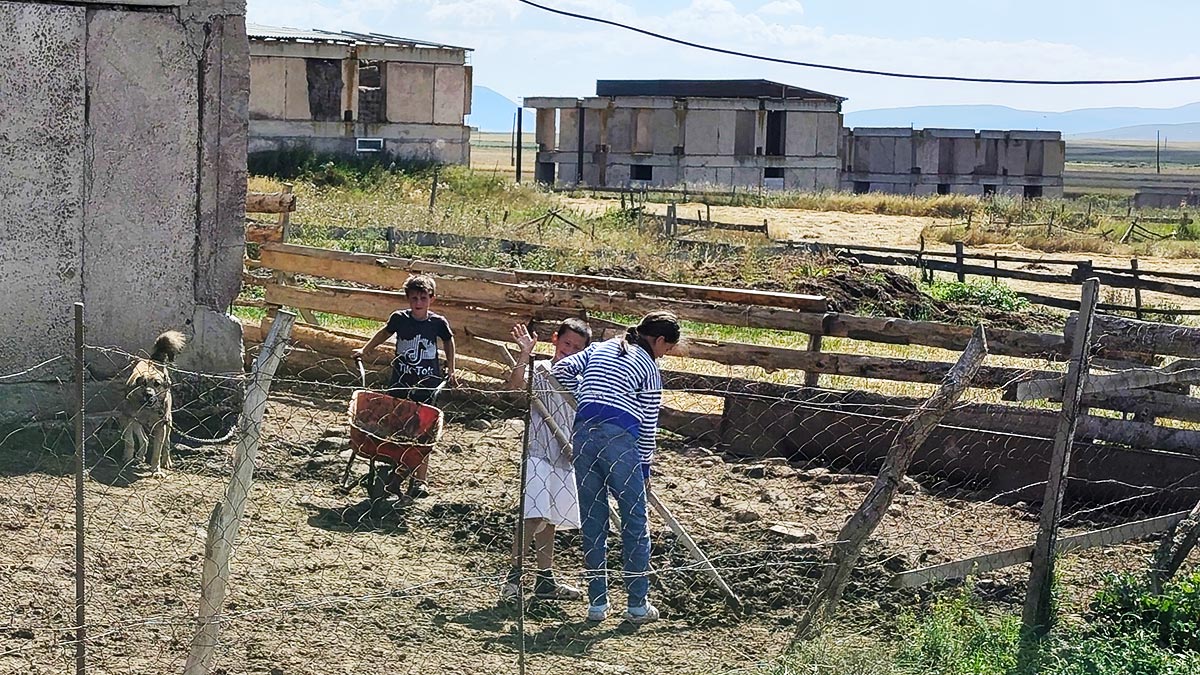
Around Lake Paravani, we drove through villages with abandoned houses and traditional roofs covered with earth and grass. Harsh winters, a severe climate, and a lack of employment opportunities left visible traces in this area.
After a short tour of the Dashbashi Canyon, we continued toward Tbilisi. Along the way, we learned another practical lesson: even a pre-confirmed accommodation reservation does not mean the room will be waiting for you. The hotel that had confirmed our arrival for months decided to cancel the reservation because we hadn't reconfirmed ten days before arrival.
We solved the situation by finding an alternative, but it is precisely such experiences that count during scouting. For a future expedition, it is not enough to know where the hotel is located. It is important to know how reliable the reservation is, what the communication with the host is like, and whether there is another option if things go wrong.
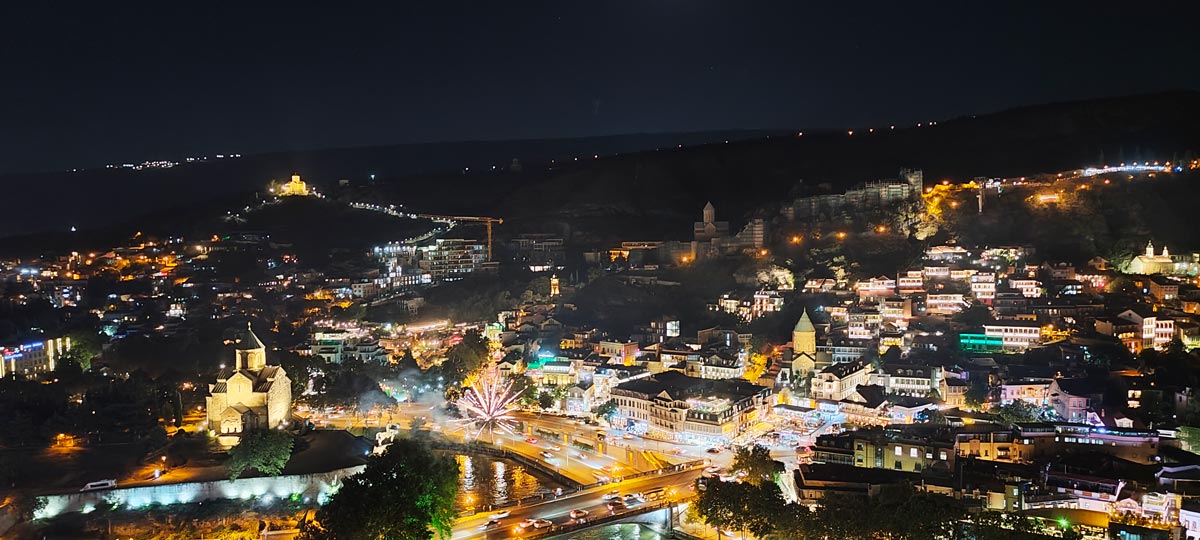
Tbilisi then surprised us with its size, liveliness, and modern amenities. After a few days of mountain roads, dust, and camping, an evening in the city was a welcome change. It ended with a ride in an open electric vehicle through the city, Georgian folk music at maximum volume, and negotiations with a driver who planned to visit Croatia and knew very well what rakija was.
The ride price, thanks to a shared topic, dropped from 200 to 130 lari.
Such encounters do not go into navigation tracks, but they often remain among the most memorable souvenirs of the trip.
From Cave Monasteries to Mud Along the Iori River
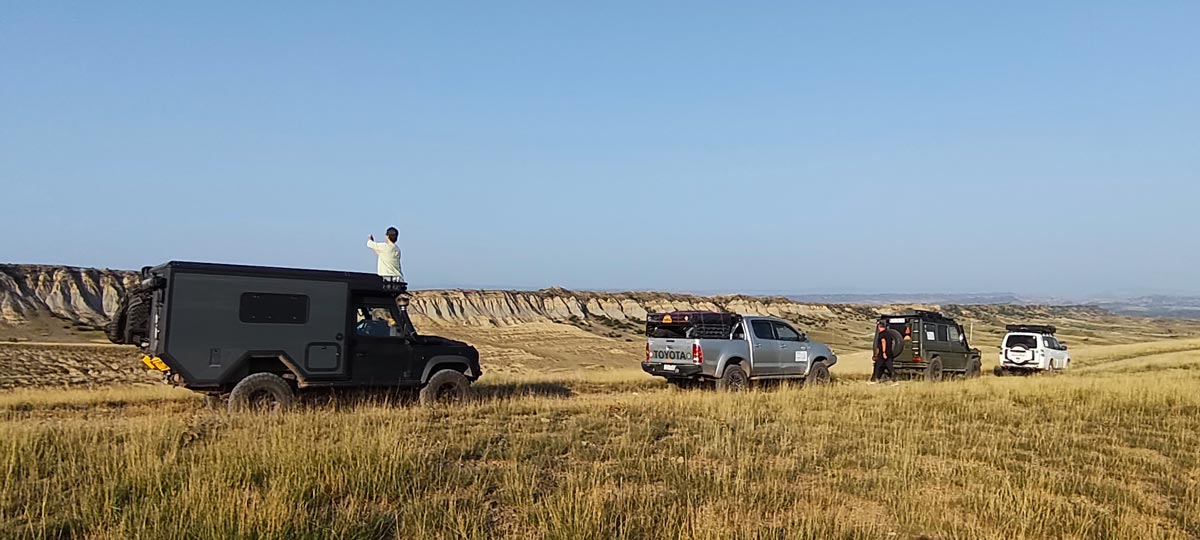
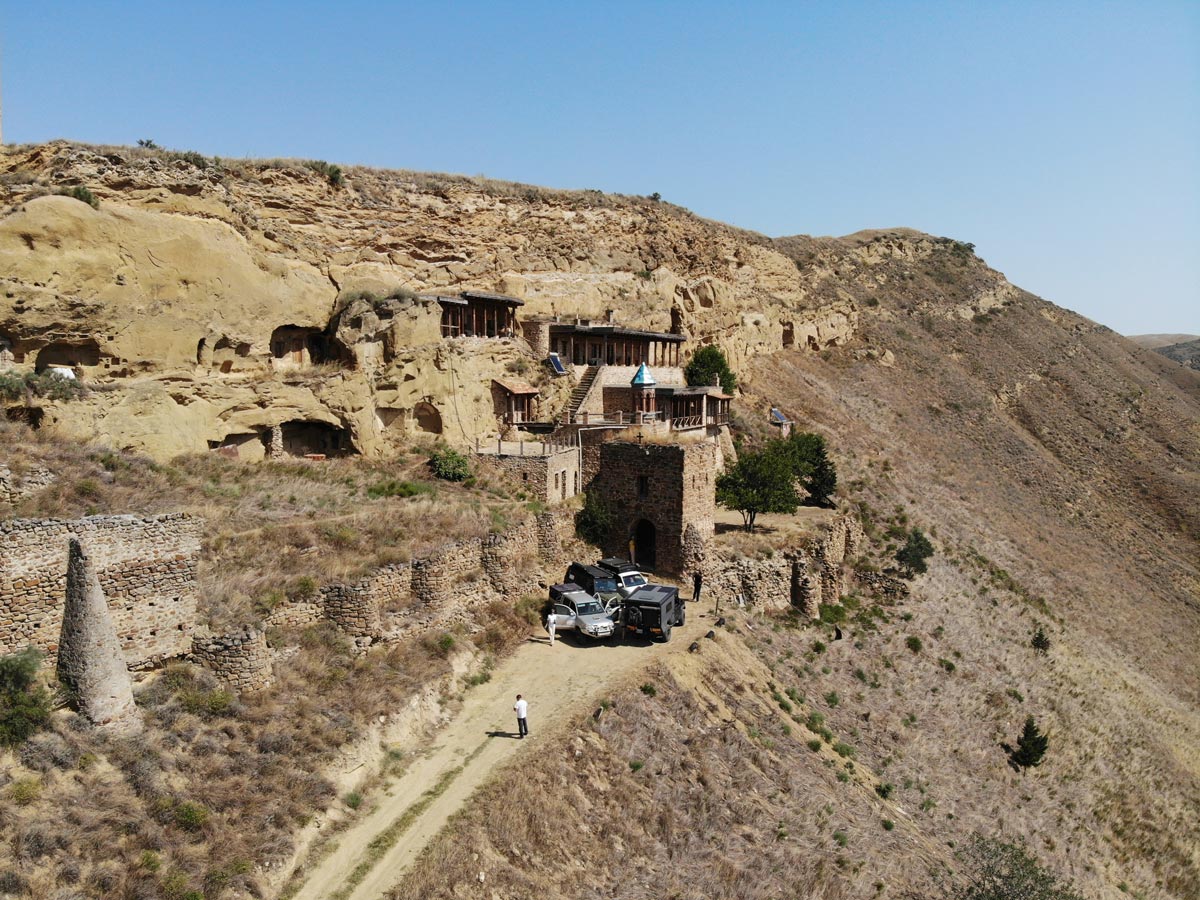
South of Tbilisi, we explored the area around the David Gareja monastery complex, on the border with Azerbaijan. Plan changes started as early as the morning, when online information about working hours brought the visit to the main site into question. After a few conversations with people on the ground, it turned out that the complex was indeed open.
We also visited the Natlisbcameli monastery, carved into reddish cliffs, where the priest treated us to watermelon after the tour and gave flowers to the women in our crew.
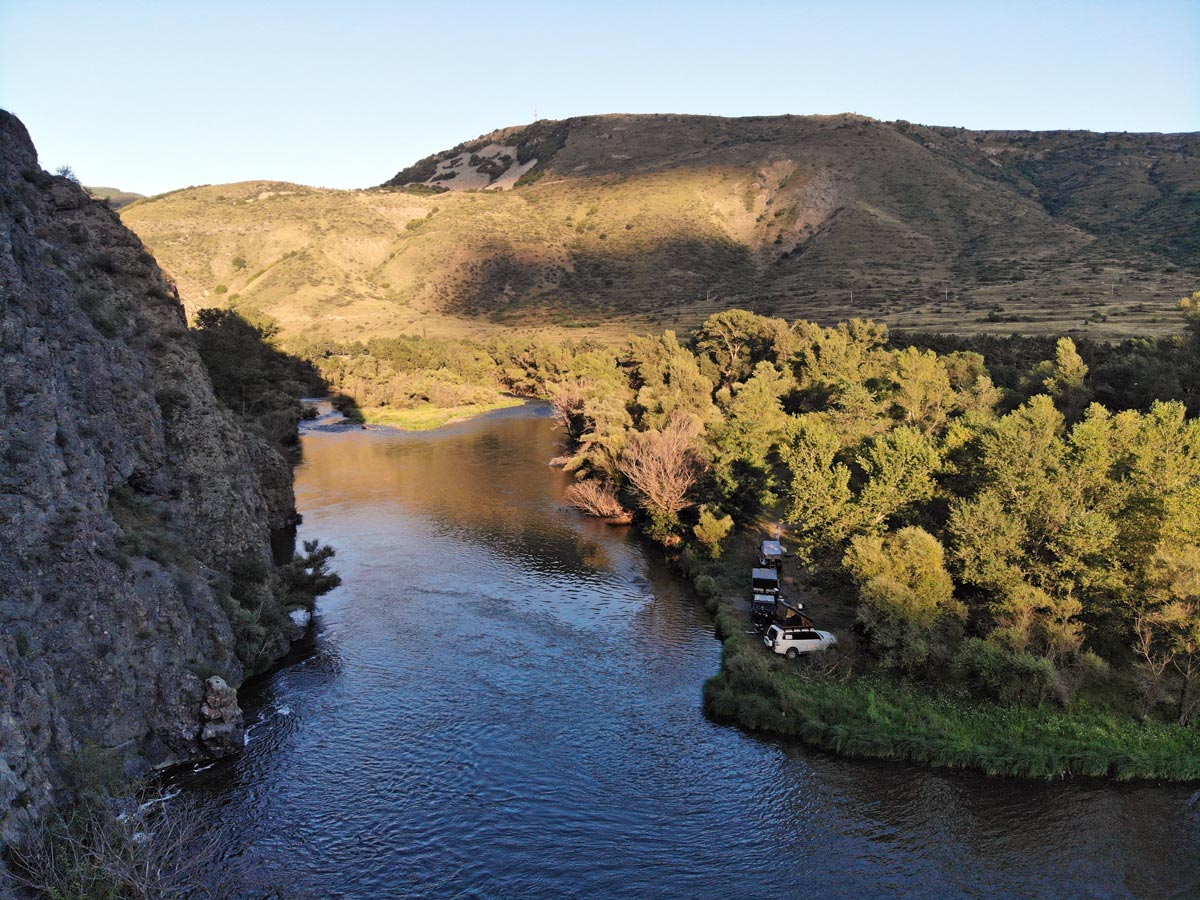
From the desolate landscape around the monastery, we continued via dirt tracks toward the Iori River, where we camped on its banks.
The next morning, an improvised bridge made of metal pipes awaited us. It looked suspicious enough that we paid more attention to it than we would have to an ordinary bridge. By carefully crossing, we established that the structure was stable, but the real challenge was yet to come.
Soft and unusually damp terrain along the river showed how much the surface can change after rain. A heavy Land Rover Defender camper got stuck in the mud, so we pulled it out with a winch. After that, we let some air out of the tires to increase the contact patch and improve traction.
These are situations that cannot be reliably assessed solely by the color of the terrain on a satellite image. It is necessary to understand the weight of the vehicle, the type of tires, their pressure, and the behavior of the soil under load. It is equally important to know when passing is reasonable and when it is smarter to change the plan.
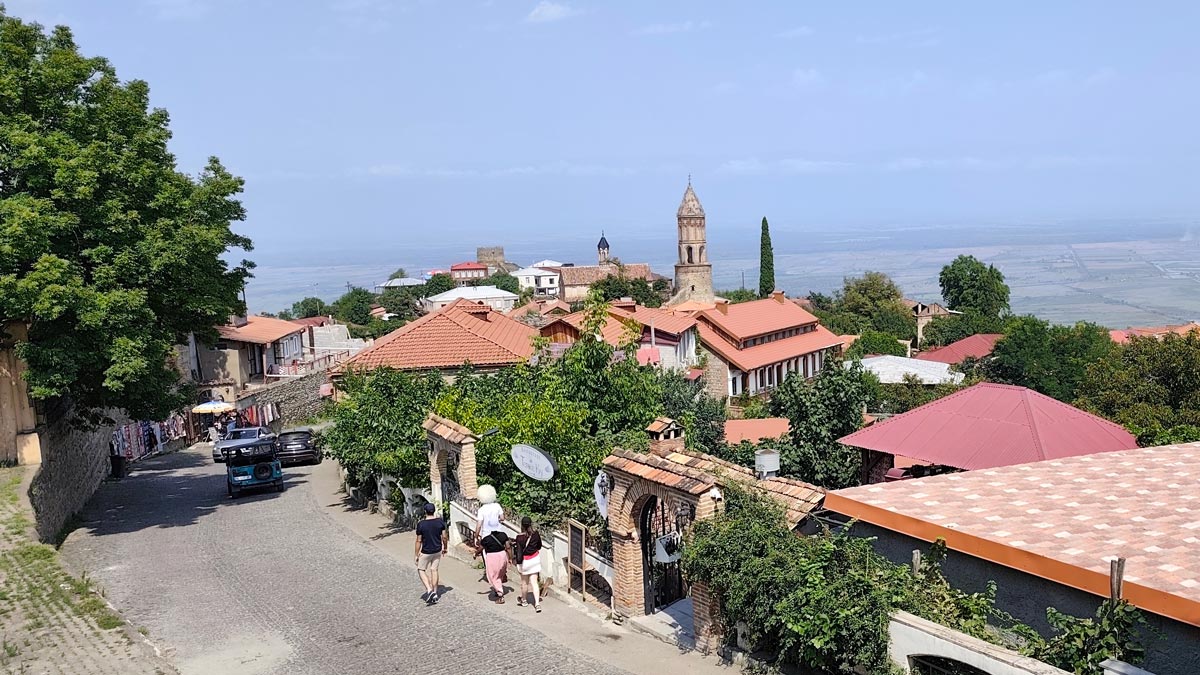
After the mud and recovery, we continued toward Kakheti, Georgia's wine region. In Sighnaghi, known as the City of Love, we were once again greeted by dry gravel roads, a view of the Alazani Valley, and a completely different landscape.
A visit to the Shumi winery allowed us to compare classic European winemaking with the traditional Georgian fermentation method in clay vessels, qvevri, buried in the ground. In Tsinandali, we also visited the historic estate associated with Prince Alexander Chavchavadze, who played an important role in the development of modern Georgian winemaking.
Georgia is not just a country of mountain tracks. It is also a land of deep history, exceptional wine tradition, and a culture best experienced when one steps away from the main tourist routes.
Abano: A Pass That Is Not Easily Forgotten
Kakheti was merely an introduction to one of the most striking stages of the entire journey.
After visiting the Alaverdi Monastery and the Badagoni winery, we filled our fuel tanks in Pshaveli. There aren't many opportunities to refuel toward Tusheti, so planning supplies here is part of the preparation, not a casual detail.
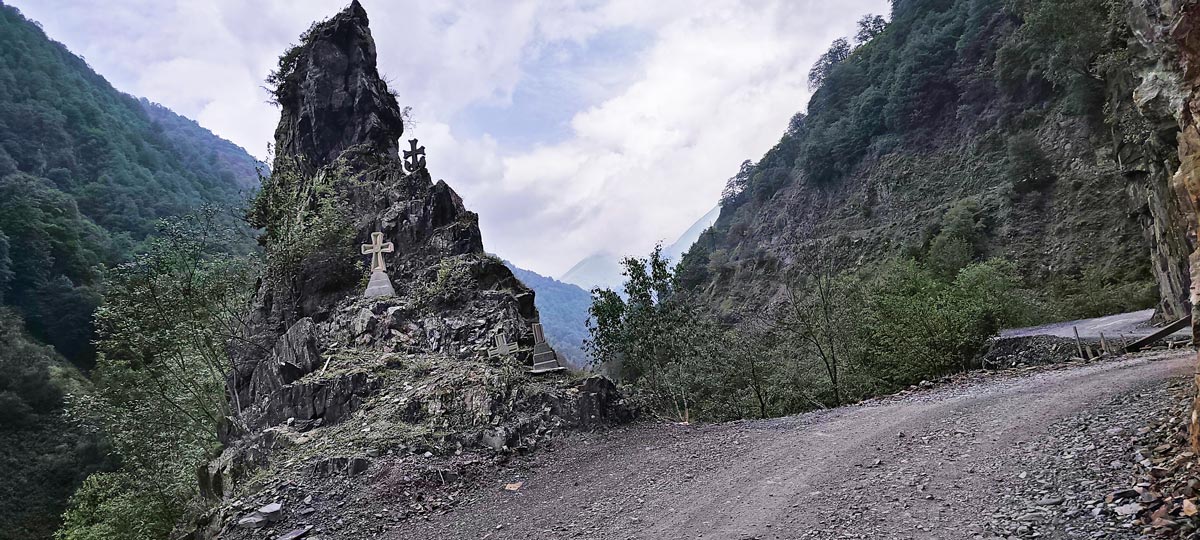
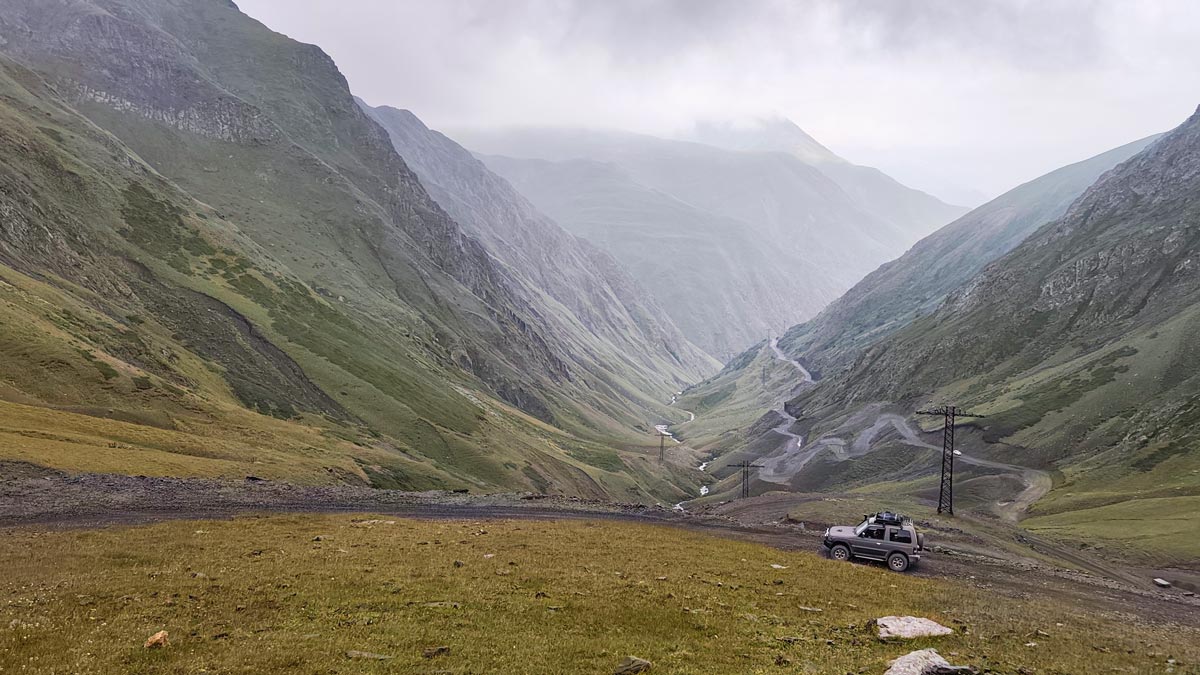
The asphalt soon disappeared. Abano opened up before us, a mountain pass leading toward isolated Tusheti.
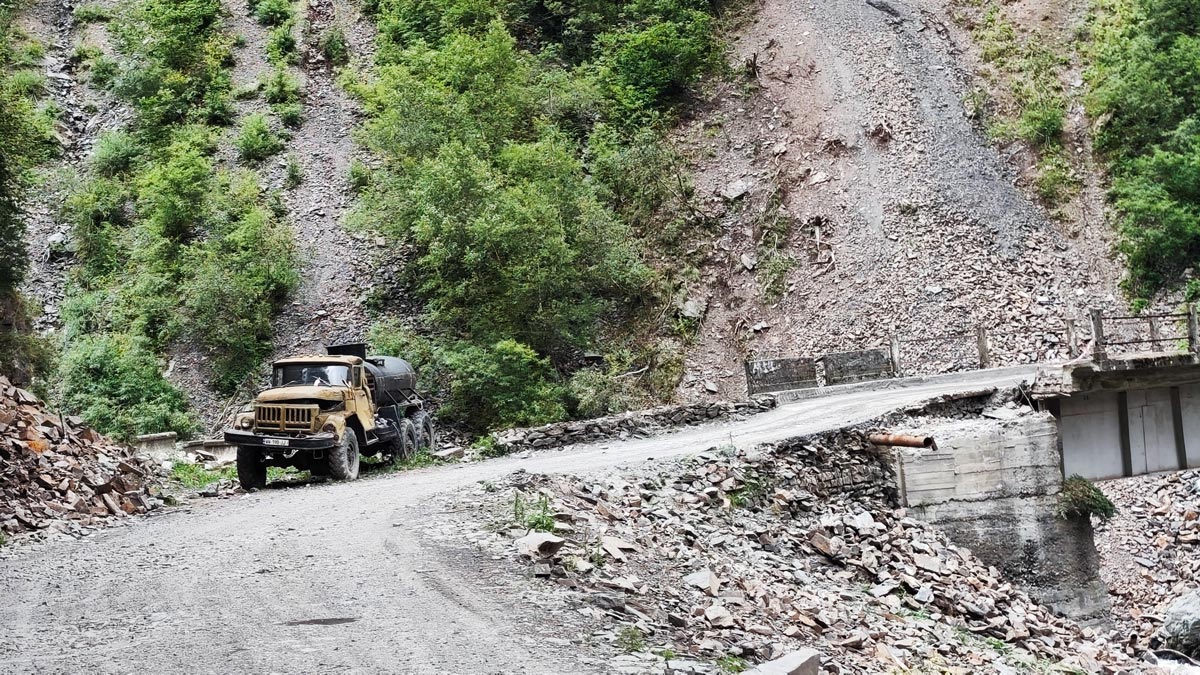
The road is in places so narrow that passing each other requires careful estimation of space, and the abysses along the edge of the road leave little room for error. At one point, we encountered a concrete mixer that remained stuck across the road due to a gearbox failure. Passing it, right by the edge of the abyss, was one of those moments when conversation in the vehicles spontaneously stops.
Shortly afterwards, we entered a thick cloud. Visibility dropped to a few meters, the road remained narrow, and local drivers continued to move at a pace clearly unsuited for our nerves.
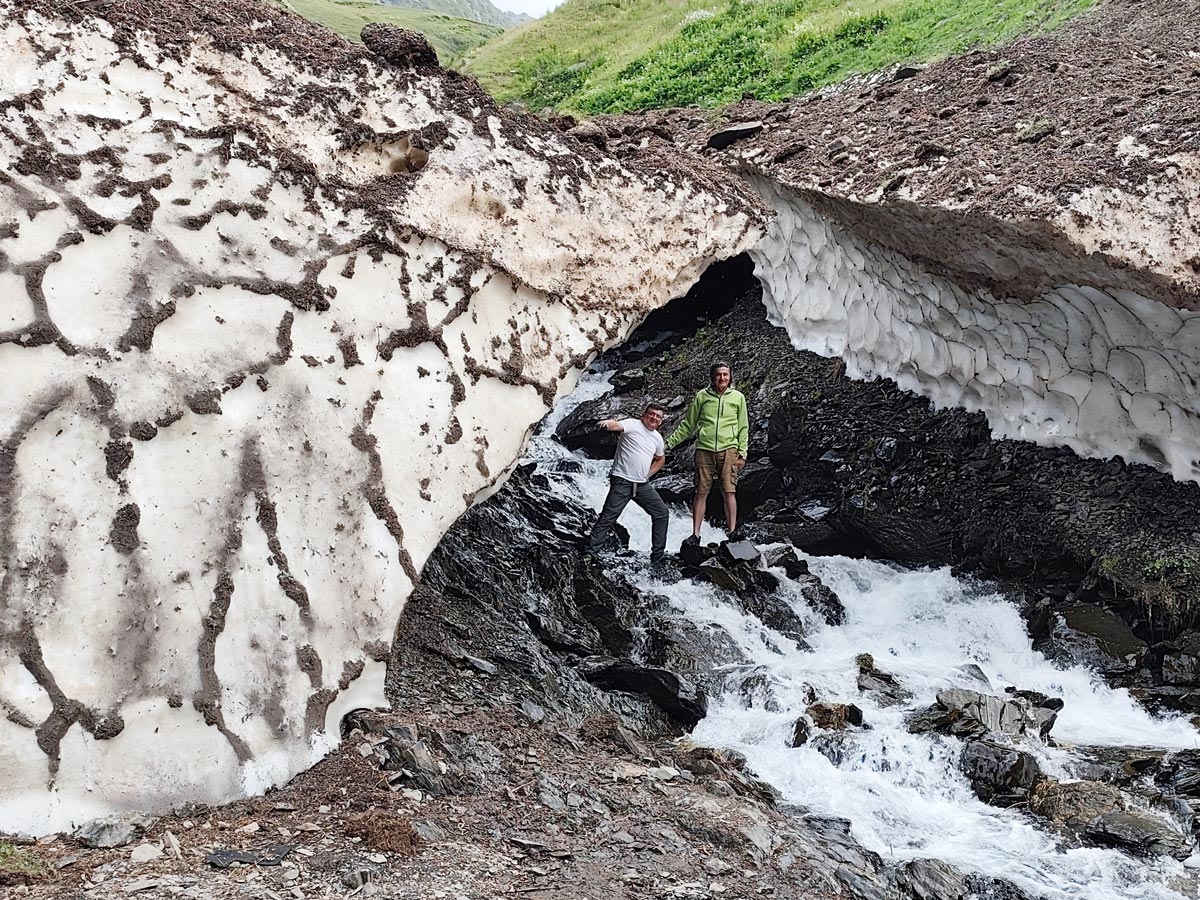
After approximately seven hours of driving through clouds, torrents, and snowdrifts over four meters high, we arrived in Omalo. To reach Dartlo, our final destination, we needed another hour and a half for a mere fifteen kilometers.
Such sections explain why mileage planning in the mountains makes little sense without knowing the specific terrain. Fifteen kilometers on a map can mean a short drive, but also several hours of concentrated work behind the steering wheel.
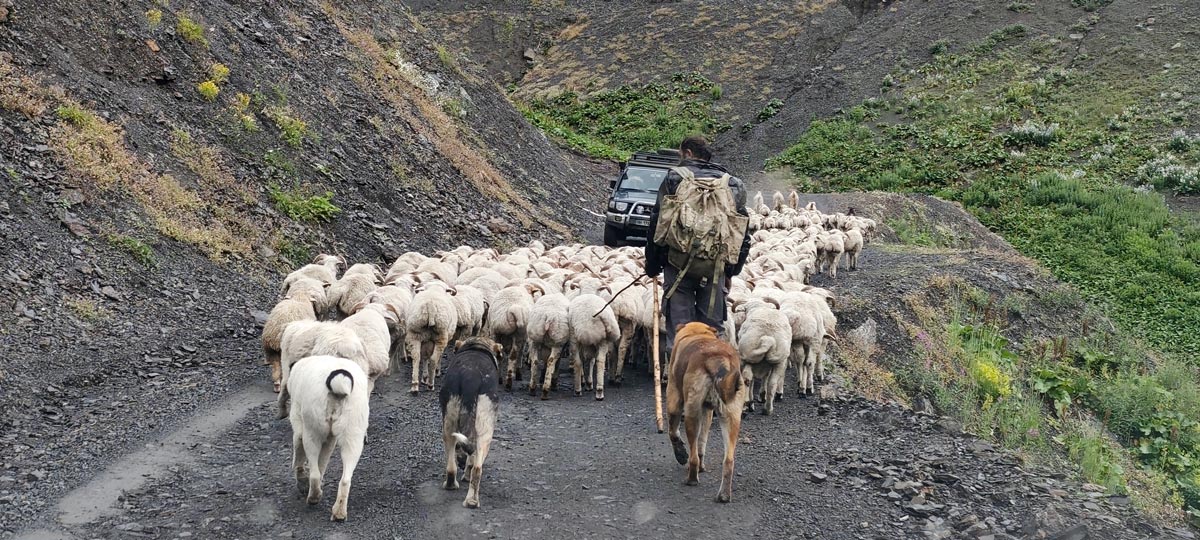
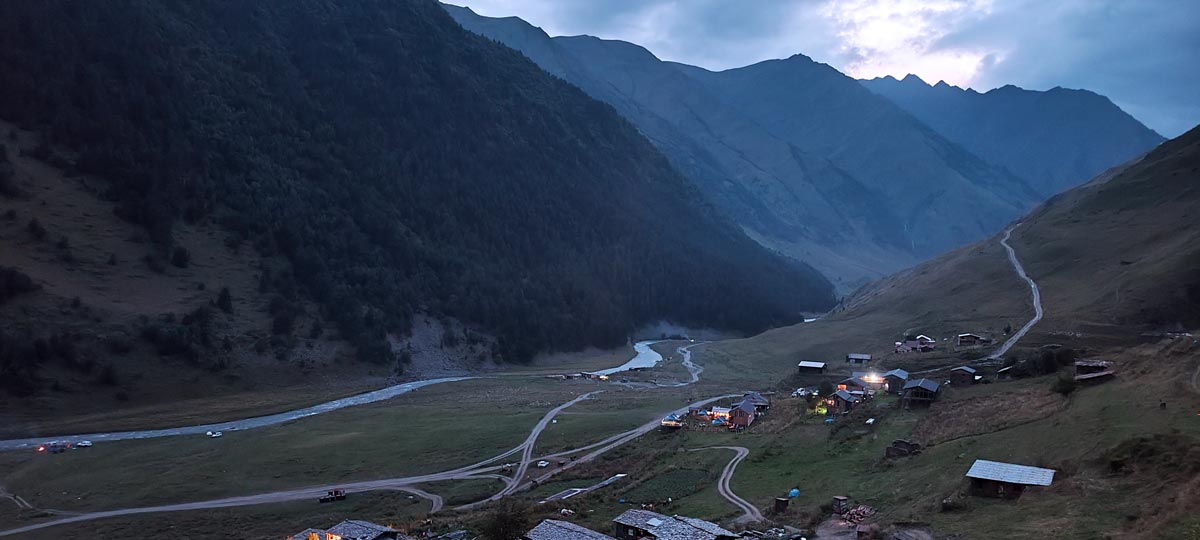
In Dartlo, we settled into a simple local accommodation and finally sat down for dinner. In this part of Georgia, you encounter a different rhythm of life, and among the most common vehicles on mountain tracks are four-wheel-drive Mitsubishi Delicas.
In Dartlo, we settled into a simple local accommodation and finally sat down for dinner. In this part of Georgia, you encounter a different rhythm of life, and among the most common vehicles on mountain tracks are four-wheel-drive Mitsubishi Delicas.
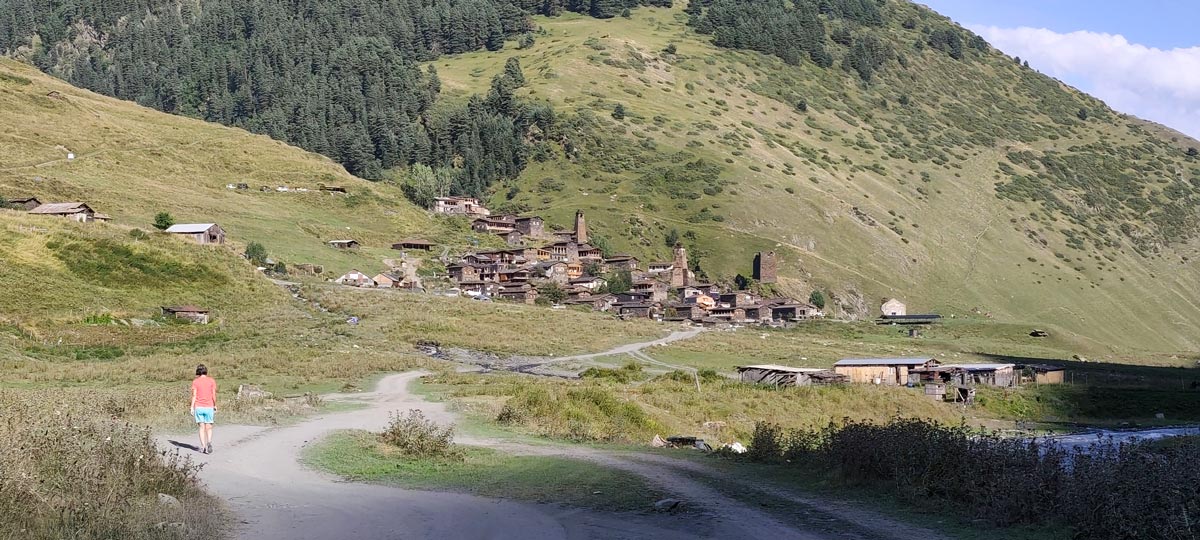
The next day, we left the cars behind and hiked up to the hamlet of Kvavlo, perched high on a rock above Dartlo. You don't drive there. The view of the valley, stone defensive towers, and the harsh mountain landscape is worth every step.
A boy of about ten years old, leading a horse carrying two more pack horses loaded with supplies toward the hamlet, remains particularly memorable to us. What seemed unusual and almost surreal to us was clearly an ordinary part of his day.
We spent the afternoon by the Didkhevi River, where we met a group of local people who immediately invited us into their company. A glass of homemade chacha appeared before we even managed to start a serious conversation.
Such moments reveal how important local contacts are for travel. Not all useful contacts are business ones, nor is every trust built through official meetings. Sometimes it is enough to stop, talk, and accept hospitality.
Return from the Mountains and Lessons Not Found in Guidebooks
The return via Abano was busier than the ascent. On narrow sections, we encountered local drivers in Delicas, vehicles that proved very capable for local conditions.
We were curious how they behaved on the terrain, so we tried to arrange a short test drive. The first driver refused as soon as we mentioned filming. The second one, however, was our host from Dartlo, who agreed as soon as we explained we wouldn't be filming.
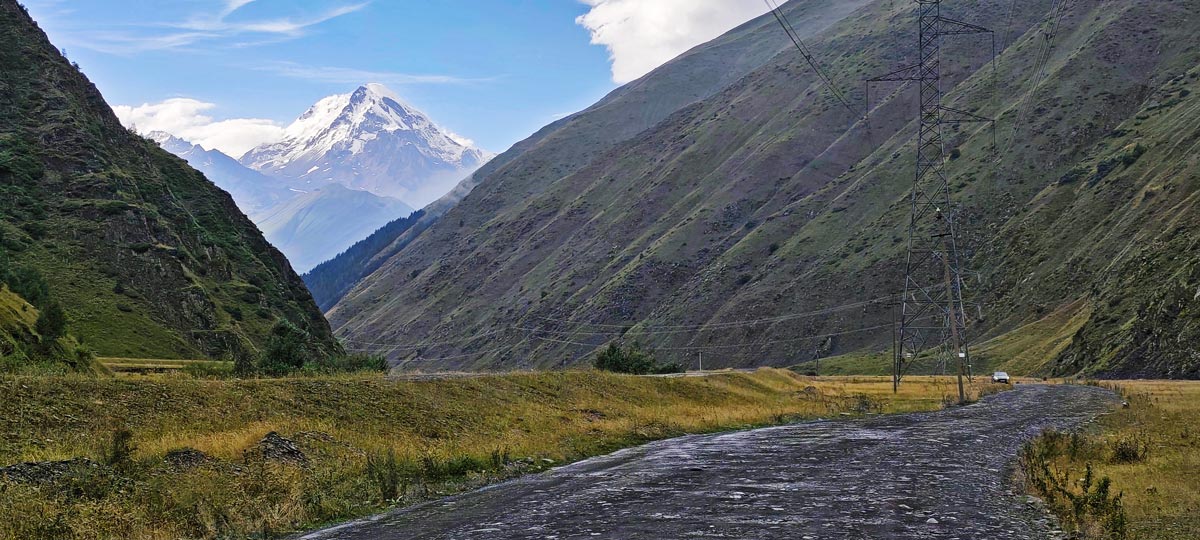
The drive showed us how well these vehicles are adapted to local roads and how much a driver's experience means on demanding sections.
On the way to Lake Zhinvali, we once again experienced hospitality that is hard to get used to. When we were trying to find out from locals where we could camp, one of them drove home for a motorcycle to personally show us the location. Along the shore, fishermen welcomed us as if we were old acquaintances, and one helped us light a fire.
This is the Georgia you won't get to know just by visiting famous sights.
For an expedition organizer, such encounters are important for a very practical reason. Local people often know best the road conditions, weather changes, access to remote areas, and possibilities not visible on the internet. Trust cannot be downloaded from a map nor bought with a single phone call.
When Asphalt Turns Back Into Serious Off-Road
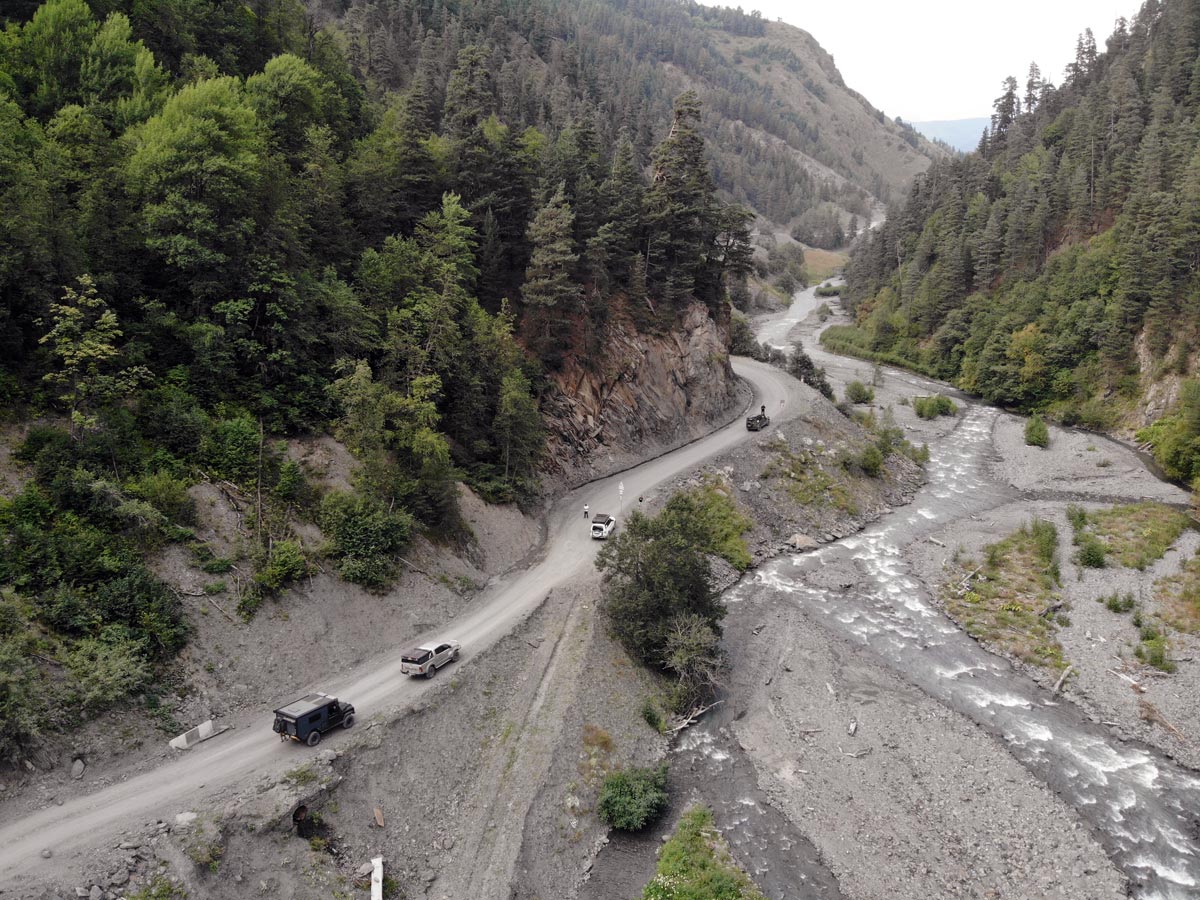
After Lake Zhinvali, we continued toward the Greater Caucasus. Near Pasanuri, we left the main road and headed toward the village of Chokhi, where one of the most demanding off-road sections of the expedition began.
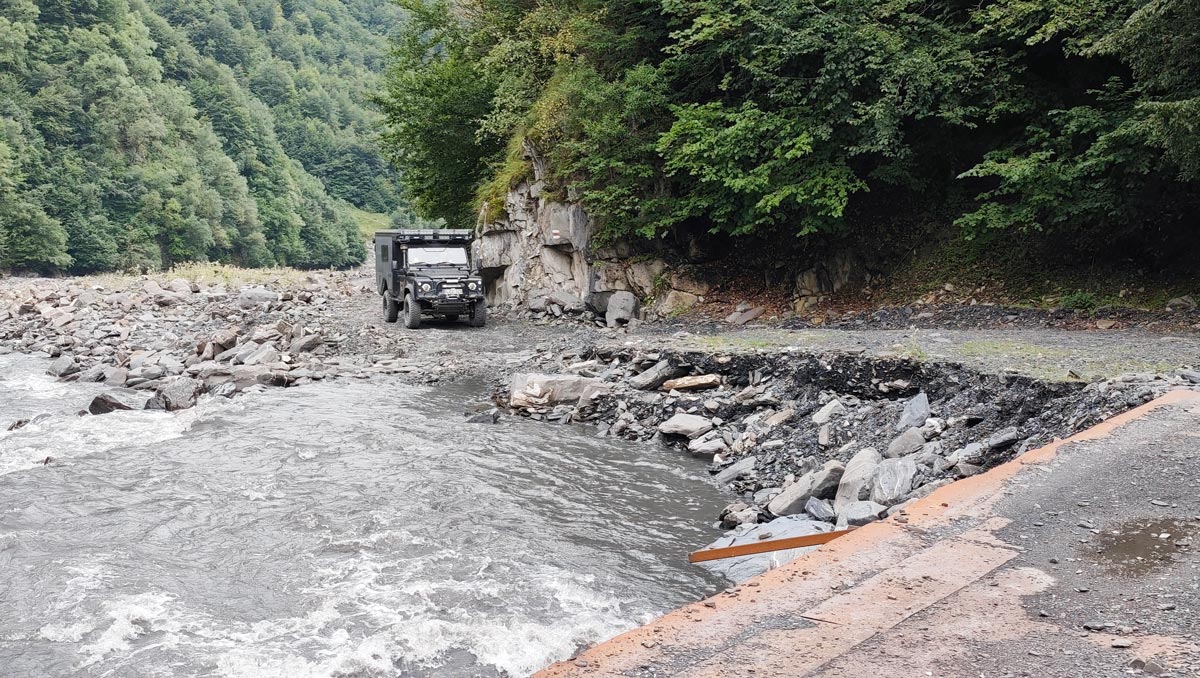
The old bridge over the river did not inspire confidence, so we decided to cross the river directly. The water was about forty centimeters deep, the current strong, and the bottom covered with slippery stones.
The road became increasingly demanding after that. We crossed the river multiple times, climbed over rocky sections, and finally encountered a landslide that created a dangerous side slope. Due to the height and weight of the Defender camper, there was a real risk of tipping over toward the river.
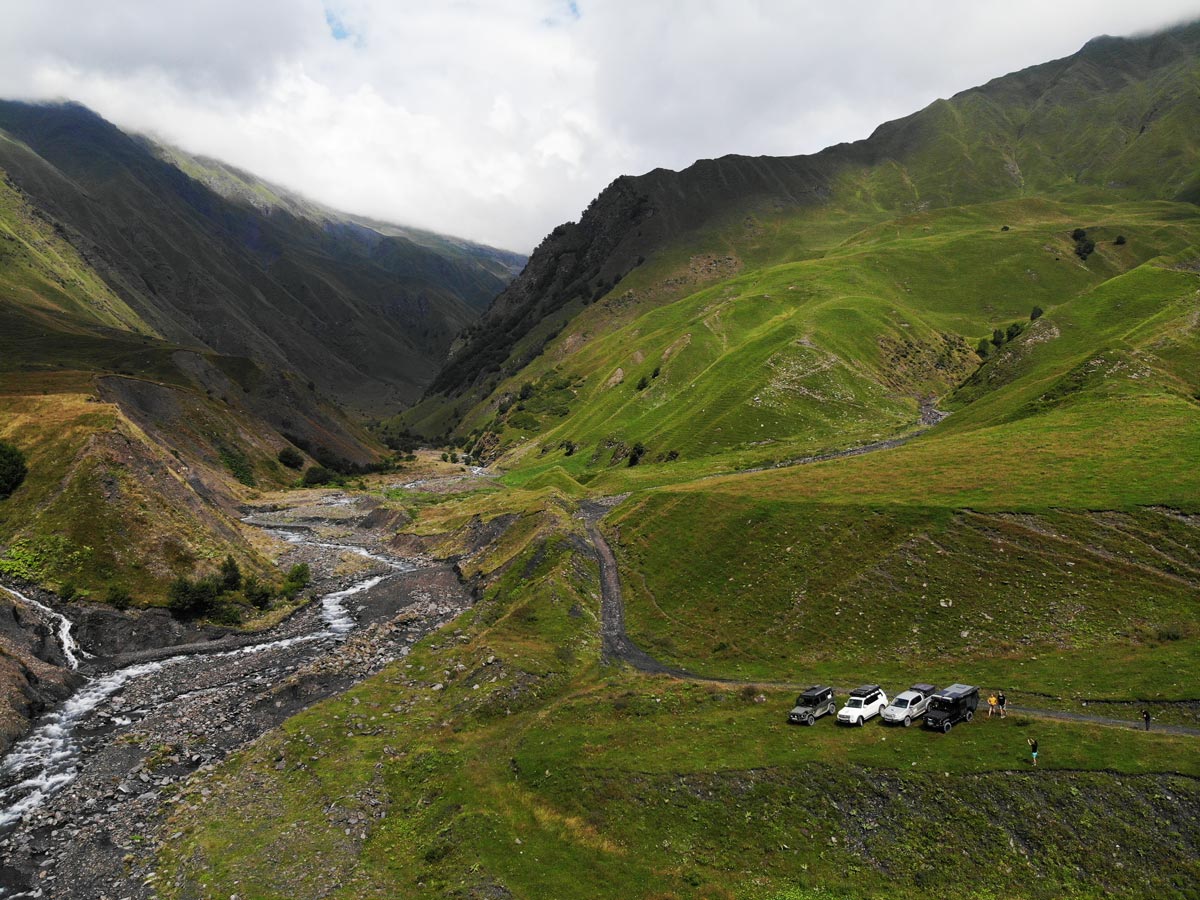
After the first attempt with the Pajero showed that the ground was collapsing under the weight of the vehicle, we stopped and did what cannot be seen in photographs: we took shovels and started preparing the passage. Four shovels, six pairs of hands, and approximately an hour of work were enough to create a safer path to continue driving.
This is precisely one of the key differences between driving along a pre-selected route and an organized expedition. A good route is not the one that looks most dramatic in a photograph, but the one whose capabilities and limitations are understood. And when conditions change, you need to know how to assess the situation and make a decision appropriate for the whole group.
After passing through Karkucha and Achkoti, we reached the Stepantsminda area and continued toward Gergeti, famous for its monastery beneath Kazbek.
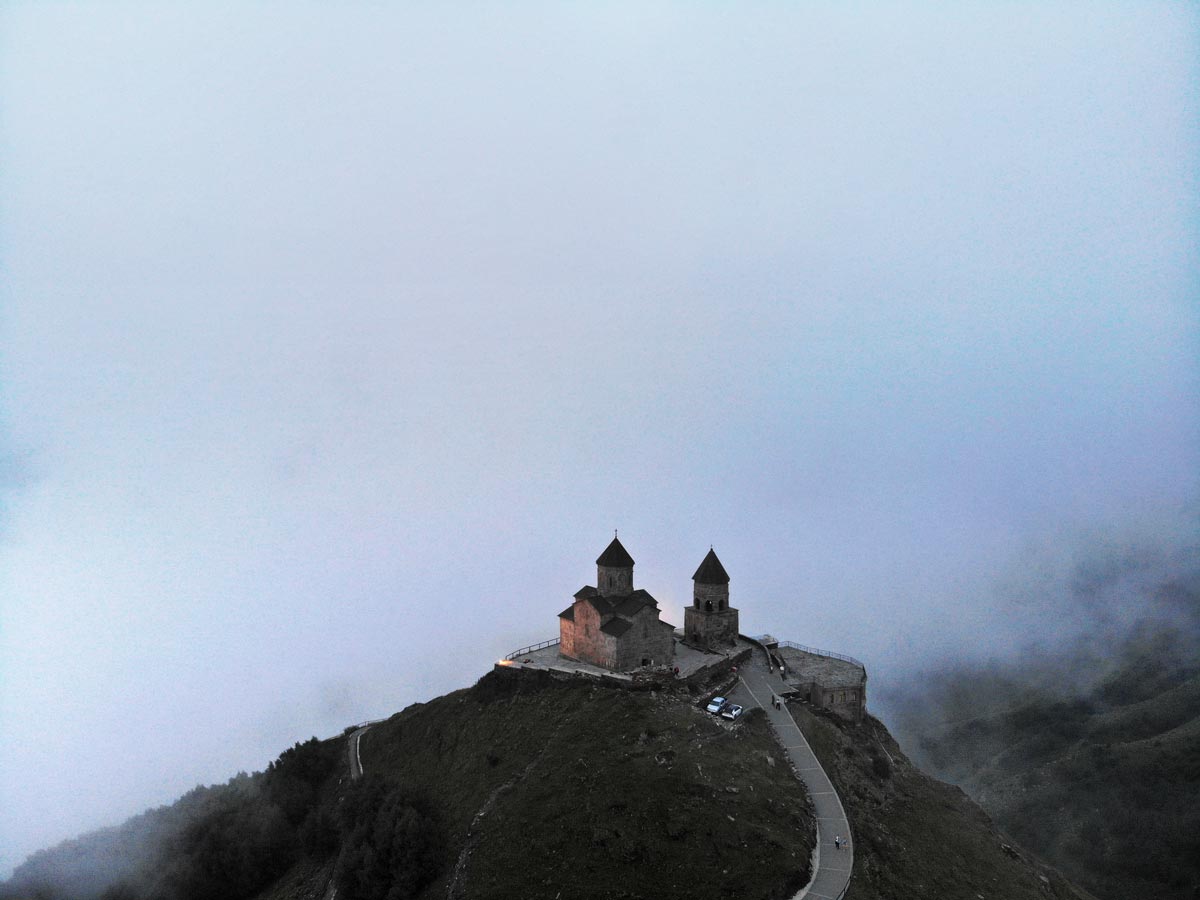
There we were greeted by huge crowds due to Mariamoba, a major Georgian holiday. Instead of the planned tour, we decided to camp nearby. When I approached a local family and asked if we could set up near their vehicles, the answer arrived in the form of a glass of homemade wine.
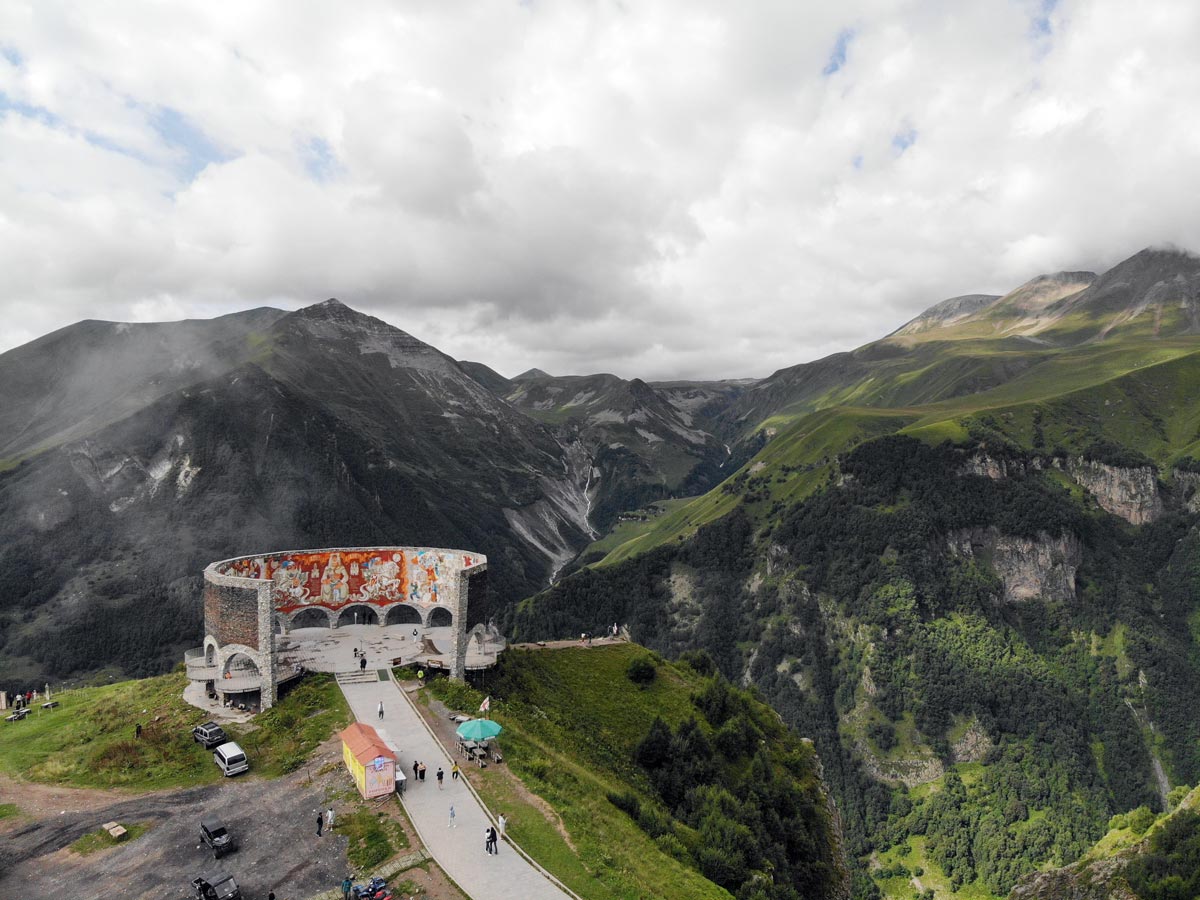
Soon we were invited to the table, and the planned dinner from our supplies became completely unnecessary. Although Kazbek and the monastery remained hidden in the clouds, the evening made up for what the weather withheld from us.
The next morning greeted us with rain. Soaking wet, we visited the Gergeti Monastery, and then headed west via the Jvari Pass. Due to bad weather and delays, we had to skip the planned tour of the Truso Valley. This is another integral part of scouting: determining what can fit into the actual schedule and what is better left for another opportunity.
On the way to Gori, we stopped in Uplistsikhe, an ancient city carved into rocks whose beginnings date back to the 2nd millennium BC. After a day spent in the rain, mountain traffic, and historical sites, we arrived in Gori, the birthplace of Joseph Stalin.
A visit to his museum left a strong impression and raised the question of how history is presented. The museum devotes a large part of its attention to Stalin's life and political career, while significantly less space is dedicated to the terror of his regime.
On our way further, we passed through Chiatura, a mining town known for its cable car system built to transport workers across steep canyons. Old cabins, industrial architecture, and the dramatic position of the town reminded us of a different face of Georgia, far from mountain postcards.
We ended the day camping by Lake Shaori, surrounded by forests and mountains.
Svaneti: When Weather Changes Both the Plan and the Impression
The final stages led us toward Svaneti and Ushguli, one of Georgia's most famous mountain settlements. The road through the green mountains was beautiful, but the rain decided to meddle again.
Ushguli is known for its medieval defensive towers and its position beneath Shkhara, Georgia's highest peak. Our expectations were high, but bad weather limited the tour, and the impression of the village was divided. Tourism and rapid construction have visibly changed part of its former appearance.
Still, it would be unfair to pass final judgment based on a single rainy afternoon. The mountain landscape can look completely different when the clouds lift, and the experience of a place also depends on how much time we can devote to it.
Due to bad weather, we gave up on planned camping and continued toward Mestia, where we found a hotel. At the reception, we were greeted by a young man who, as soon as he heard we were coming from Croatia, spontaneously mentioned Luka Modrić and Nikola Tesla.
Such encounters may not be the reason why we plan a route, but they are often the reason why we remember it.
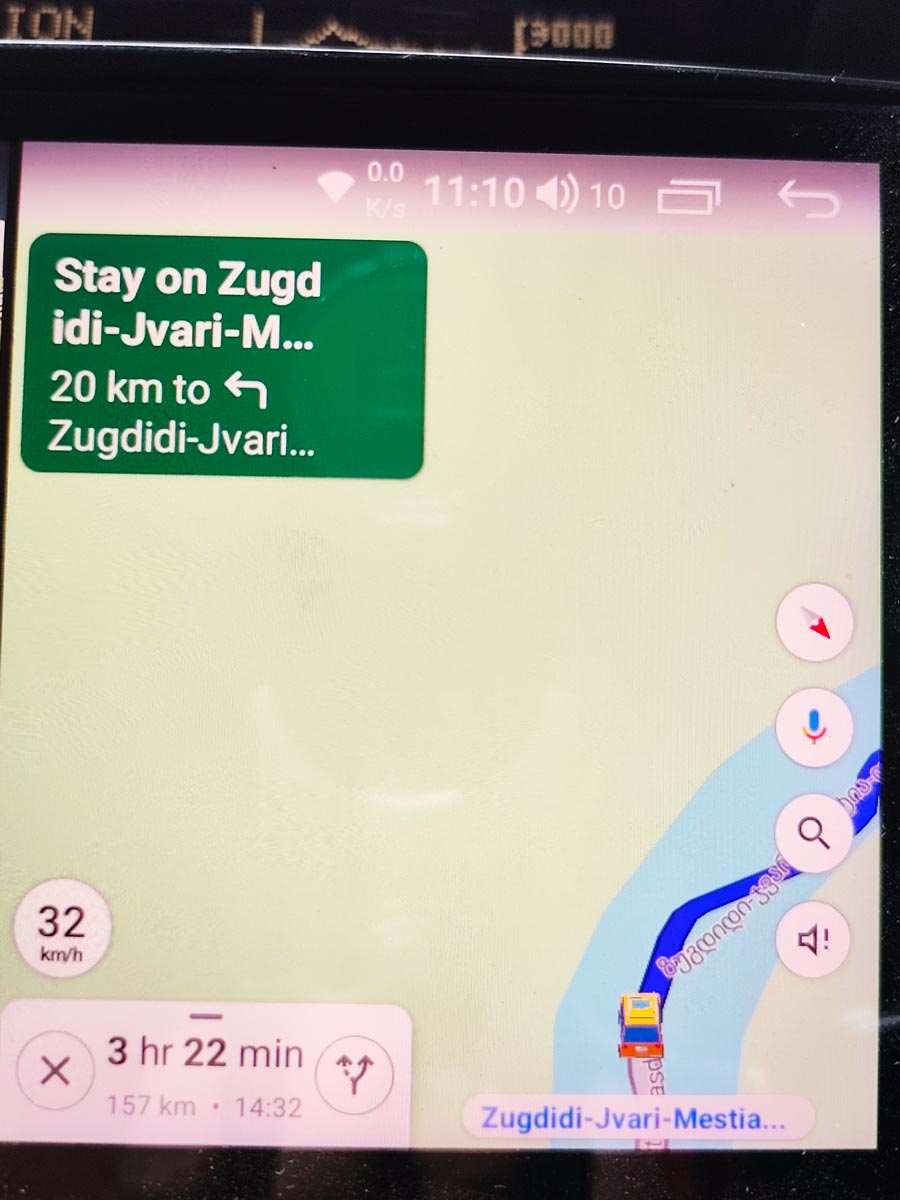
On the final day, we headed toward the coast. At one point, navigation led us for almost thirty kilometers along a path drawn directly through a riverbed. Later, we encountered a traffic jam caused by a herd of cows on the road. In Georgia, such scenes are part of everyday life: animals move along roads, drivers wait, and traffic resumes when conditions are met.
For the final tour, we chose Prometheus Cave, where we opted for an exit via an underground river. The boat ride through low passages turned out to be more exciting than we expected, and helmets quickly proved very useful.
At the end of the day, in a hotel in Kobuleti, an Armenian seasonal worker greeted us with a bottle of chacha and a clear intention to treat us to a welcome drink. After initial resistance and the unexpected appearance of Coca-Cola as a possible solution, I accepted the host's toast. The traditional rule of three shots followed.
It was a fitting end to an expedition that offered something we couldn't predict in advance almost every day.
What Remains After 2 Weeks?
Georgia thrilled us with its landscapes, but the value of this expedition is not just in the kilometers traveled, photographs, or the number of visited sights.
During fourteen days, we checked approaches, surfaces, mountain passes, and camping possibilities. We met local people, experienced the unpredictability of weather and traffic, and saw how plans must be adapted to actual conditions. We passed some sections without difficulty, while others required a winch, shovels, or simply abandoning the initial idea.
All of this goes into the preparation of a future guided expedition.
When guests set out on the road with us, they don't have to rediscover every road, look for every camping spot, or find out only on the spot that a planned section may take several hours longer than navigation suggests. Our job is to get to know the terrain as much as possible in advance, develop local contacts, prepare alternatives, and understand what a particular route requires from the vehicle and driver.
Scouting, of course, does not mean we can predict every rain, landslide, or closed pass. The mountains always retain the right to the final word. But it means that we make decisions based on our own experience, and not just information from a screen.
Georgia has once again proven that the true value of a 4x4 expedition is in the combination of terrain, people, and unpredictable moments. From the snowdrifts on Abano to the improvised bridge along the Iori, from ancient cities carved into rocks to a glass of homemade wine offered to a complete stranger—all these are parts of the same story.
Georgia is not just a destination. It is an experience that begins long before departure and continues long after return.
And the Next Story Is Already Being Prepared
In the sumer of 2027, Magna Expeditions is planning a new scouting expedition, this time toward the mountain tracks and plateaus of Armenia. Exploration of new routes continues, and invitations for ME Club members to participate are sent via our internal channels.
See you on the next route.
 Minimum not met
 Trip confirmed
 Fully booked