 HR
HR  DE
DE 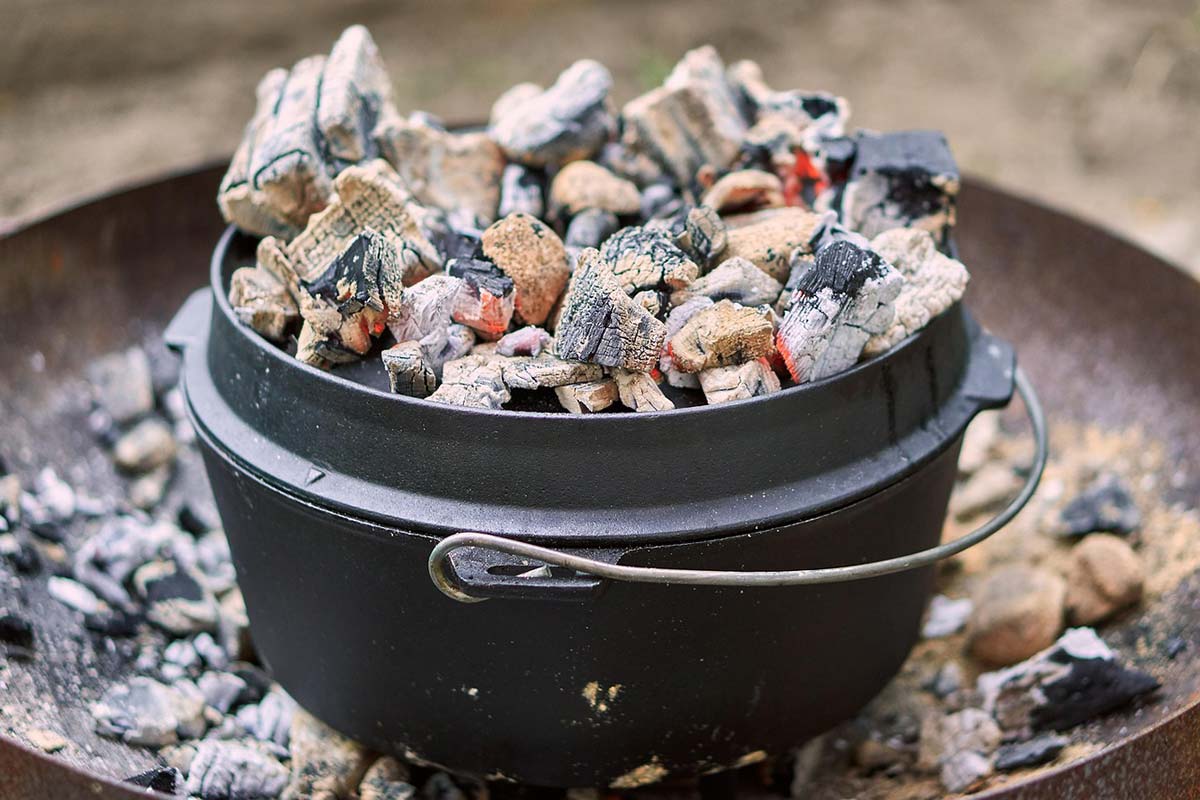
Why’s the Dutch Oven So Loved Worldwide?
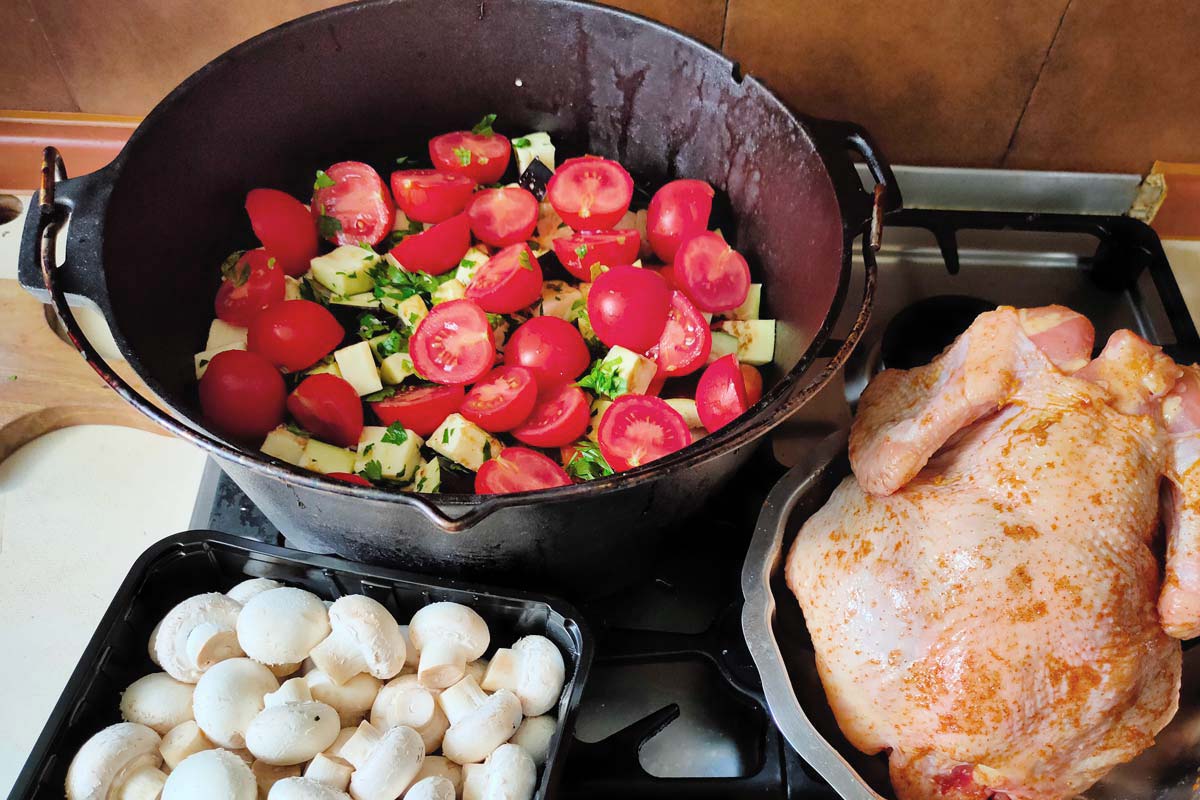
First off, this pot is a total beast. Cast iron – or “gus,” as we call it – can handle anything: roaring flames, rough tumbles, you name it. No enamel means no worrying about chips or cracks, and over time, it builds up that awesome natural patina that keeps food from sticking and adds a special flavor to your meals. You can whip up a goulash like in a kotlić, roast lamb like under a peka, bake crispy bread, or even tackle lasagna or pizza by tossing some embers on the lid. It’s like having a whole kitchen packed into one rugged piece!
What’s the Catch?
Now, it’s not all sunshine and rainbows. The Dutch oven is heavy – like, really heavy. A 9-liter one can tip the scales at about 10 kilos, so if you’re hiking to your campsite, you’ll feel it. The kotlić and peka have the edge here, often being lighter or at least easier to lug around. Plus, maintenance: this cast iron beauty demands some TLC. Skip the detergent, and you’ll need to rub it down with oil or fat to keep rust at bay – unlike a peka or kotlić, which you can just rinse and call it a day. It takes a bit of love, but it pays you back with personality. Pro tip: if you’re driving, swing by a self-service car wash, blast it with a pressure washer (no soap!), dry it off, and coat it with oil or pork fat (though there are fancy seasoning products too).
How Does It Stack Up Against Kotlić and Peka?
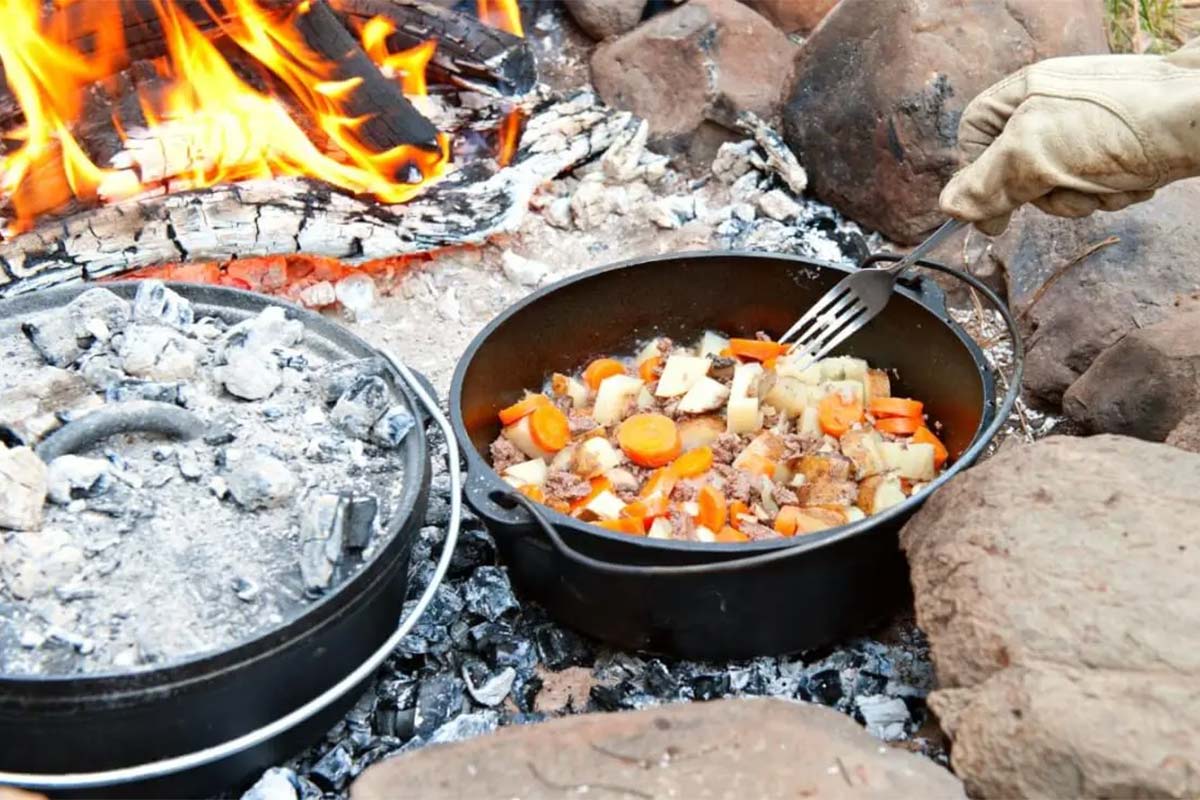
In Croatia, we’re obsessed with the kotlić for perfect paprikaš or fish stew – tripod up, fire below, and you’re set. The peka, meanwhile, reigns supreme for roasting – meat and potatoes under embers taste like childhood memories. At first, the Dutch oven won’t quite match that vibe if you’re hooked on kotlić or peka, but that’s just habit talking. It’s a multitasker. Cook a goulash or stew like in a kotlić, roast lamb like under a peka – sure, it’s a bit shallower than a kotlić and deeper than a peka, but I’d dare say it holds its own against both. Why’s it better? Kotlić and peka are usually made of thin metal that doesn’t spread heat as evenly as chunky cast iron, which keeps everything nice and consistent.
Why Give It a Shot?
The unenameled Dutch oven is for folks who want to let their culinary imagination run wild by the campfire. Yeah, it’s heavy and needs some pampering, but once you get the hang of it, it opens up a world of possibilities – from stews to outdoor pizza. Kotlić and peka are in our blood, but this cast iron gem brings something fresh to the table around here. If you’re the type who loves to experiment and doesn’t mind a little sweat, the Dutch oven might just become your new camping MVP. It’s not really for quick meals – that’s what the grill’s for – but flip the lid upside down, and boom, you’ve got a cast iron griddle for grilling too. Give it a try – it might surprise you!

Practical Tips for Buying a Dutch Oven
From personal experience, I can vouch for Petromax Dutch ovens. I’ve got a few in different sizes, recommended them to tons of friends, and not one has been a dud. They’re pricier, sure, but the craftsmanship is top-notch, and they come “seasoned” (or “eingebrannt” in German) – ready to roll right out of the box. Plus, Petromax has a whole lineup of accessories to match.
Here’s the deal: the heavier the Dutch oven, the thicker the walls, and thicker walls mean more even heat distribution. But make sure the casting is solid – walls should be uniform. If you plan to hang it like a kotlić on a chain, balance is key; uneven walls will make it tip. I once picked up a cheap one at Kaufland, hung it on my finger, and it didn’t sit level – a quick test you should always do. For chain-hanging, look for a little triangle notch on the handle to keep it centered.
Check the lid too – a high rim is a must. Without it, embers and ash might tumble into your food when you lift it, and trust me, that’s no picnic. Since campfire temps are tricky to control, it’s handy if there’s a small gap between the pot and lid for a thermometer probe – perfect for slow-cooking pulled pork while keeping tabs on the heat inside.
Most brands offer two nearly identical versions: one with legs, one without. The legs (about 3-4 cm high) are great for charcoal briquettes – they fit right underneath. But for cooking over a campfire’s embers, those legs are too short; the pot sinks into the coals and snuffs them out in minutes. If you’re campfire-bound, go legless – I learned that the hard way and ended up grinding mine off with an angle grinder. Instead, grab or make a stand with 10-15 cm legs to keep it above the embers. Bonus: a legless Dutch oven takes up less space in the car, won’t scratch your trunk, and works on your induction stove at home too.
 Minimum not met
 Trip confirmed
 Fully booked